
Amarnath Yatra search demand rises sharply every summer because travellers need current dates, registration rules, route choice, fitness guidance and Kashmir travel impact. This page is informational only: use it as a planning guide, then verify final yatra rules with the Shri Amarnathji Shrine Board before booking.
Last updated: May 10 2026
Reviewed by: ATARA DMC local Kashmir and Ladakh travel team
Quick Answer
| Announced 2026 yatra window | July 3 to August 28, 2026, as reported from the SASB-chaired announcement. |
| Registration | Reported to open April 15, 2026. Registration is mandatory. |
| Main routes | Traditional Nunwan-Pahalgam route and shorter Baltal route. |
| Who should be cautious | Children, elders, pregnant travellers, people with heart, lung or altitude-related conditions, and anyone without a valid health certificate. |
Need help applying this to your trip?
Use this guide for research. If you want route, hotel, vehicle or season-specific planning for Kashmir or Ladakh, send the team your dates and traveller count.
How to enquire: To turn this guide into a practical Kashmir or Ladakh plan, use Request Callback, WhatsApp or the contact form. Share your destination, dates, traveller count and hotel preference so ATARA can suggest route-wise options.
Turn yatra research into a practical Kashmir route
Use official channels for registration and documents; use ATARA for the surrounding stays, road movement and family pacing.
2026 Dates and Registration
Public reports citing the Jammu and Kashmir Lieutenant Governor and the Shri Amarnathji Shrine Board announcement state that the 2026 Amarnath Yatra is scheduled from July 3 to August 28, 2026, lasting 57 days. Registration was reported to begin on April 15, 2026.
Registration is mandatory. The Indian Express reported that registration would be available through designated bank branches and online through the SASB website. Treat the SASB website as the final authority for forms, bank lists, medical certificate format, RFID requirements and any operational changes.
Eligibility and Documents to Prepare
Reports on the 2026 announcement state that pilgrims aged 13 to 70 are eligible, with registration mandatory. A compulsory health certificate is normally required because the yatra involves high altitude, cold exposure and physically demanding terrain.
| Item | Why it matters |
|---|---|
| Government ID | Registration, verification and travel checks |
| Compulsory health certificate | Medical screening for high-altitude pilgrimage |
| Yatra registration/RFID details | Mandatory access and movement tracking |
| Hotel/transport confirmations | Useful during security and route checks |
Pahalgam Route vs Baltal Route
| Route | Approx. distance | Best for | Tradeoff |
|---|---|---|---|
| Nunwan-Pahalgam route | About 48 km trek | Pilgrims wanting the traditional, gradual route | Longer trek, more days needed |
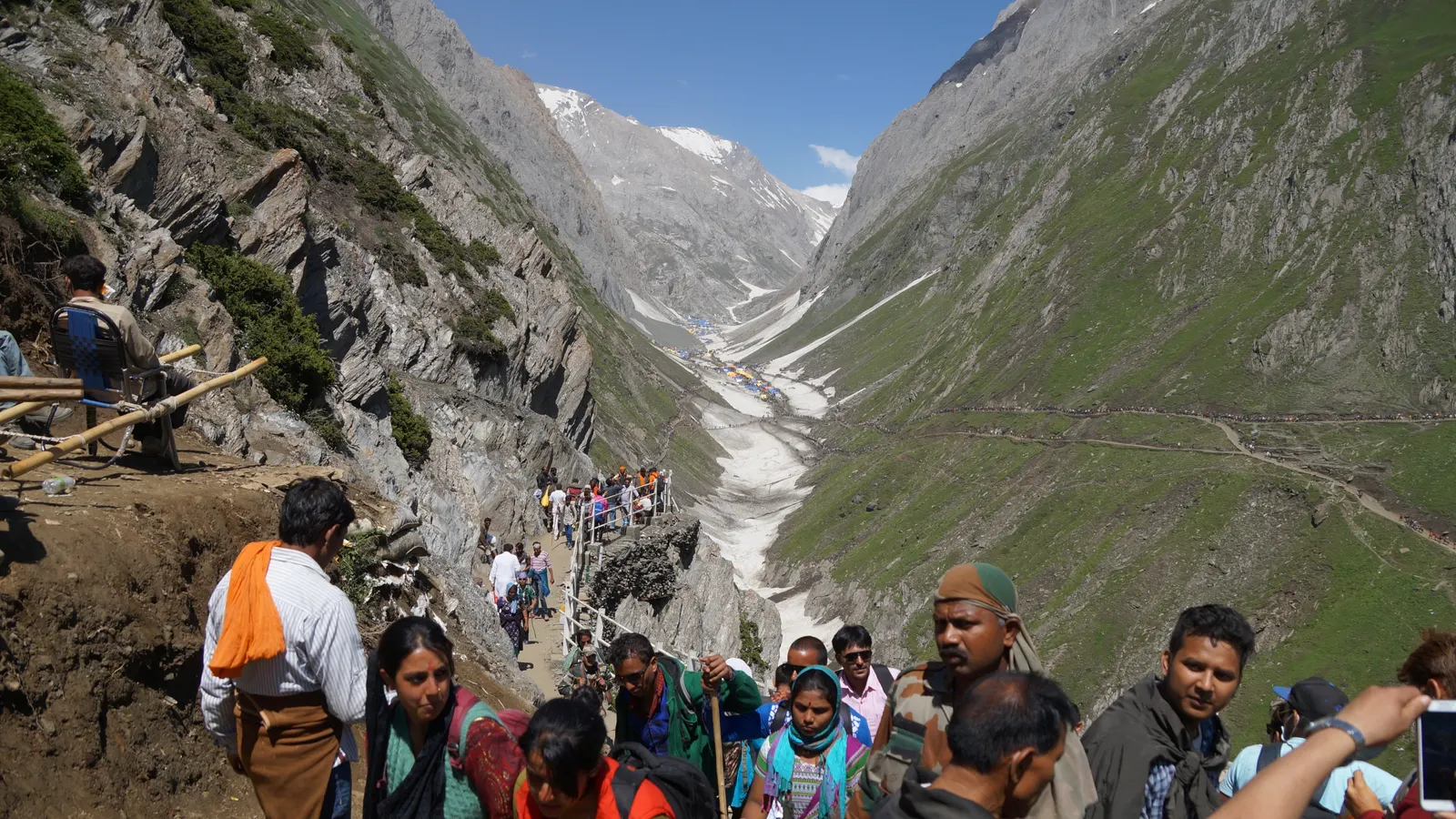
| Baltal route | About 14 km trek | Fit pilgrims with limited time | Shorter but steeper and more physically demanding |
The Pahalgam route is usually considered more gradual and traditional. Baltal is shorter but steep. Do not pick Baltal only because it is shorter; fitness matters more than distance.
Estimated Cost Heads
Costs vary by transport, stay category and helicopter availability. Budget for registration and medical certificate, travel to Jammu/Srinagar/Pahalgam/Baltal, accommodation, ponies or palki where permitted, food, rain gear, warm clothing and buffer days. Helicopter seats, if available, are limited and should only be booked through official or authorised channels.
| Cost head | Planning note |
|---|---|
| Registration and certificate | Verify current fee/process with SASB |
| Travel to base route | Flight/train/road to Srinagar, Pahalgam or Baltal sector |
| Accommodation | Book early in Pahalgam, Sonamarg, Baltal or Srinagar |
| Support services | Pony, palki or helicopter only through authorised channels |
| Buffer days | Important because weather can pause movement |
For a wider Kashmir trip cost context, compare this with the Kashmir trip cost guide.
Suggested Planning Timeline
April-May: confirm registration process, medical certificate requirements and route preference.
May-June: book flights/train, hotels and route transfers; begin walking/cardio preparation.
Two weeks before: recheck weather, yatra advisories, ID documents and packing.
During travel: follow official route instructions, avoid shortcuts and keep buffer time.
Do not leave registration or medical paperwork for the final week. Last-minute yatra planning usually becomes more expensive and stressful.
Impact on Kashmir Tourists
During yatra weeks, Pahalgam, Baltal, Sonamarg and Srinagar can see higher security checks, traffic regulation and hotel pressure. Non-yatra tourists should keep buffer time, avoid tight same-day airport transfers after long road drives, and check route advisories before moving between Srinagar, Pahalgam and Sonamarg.
If your Kashmir holiday is not a pilgrimage, you can still travel during the yatra window, but choose hotels and transfers with flexibility. Avoid planning Sonamarg, Pahalgam and airport departure as tightly packed same-day movements.
Packing and Health
Carry layered warm clothing, rain protection, waterproof shoes, personal medicines, torch, ID, registration documents, health certificate copies and high-energy snacks. The cave is high altitude and weather can turn quickly. Consult a doctor before registration if you have asthma, cardiac history, hypertension, recent surgery or any altitude sensitivity.
Even fit pilgrims should train gradually. Regular walking, stair climbing and breathing comfort matter more than gym strength. If you feel chest pain, severe breathlessness, confusion or persistent vomiting at altitude, seek medical help immediately.
Route Choice: Who Should Pick What?
Choose Pahalgam if you want the traditional route, more gradual acclimatisation and enough days. Choose Baltal only if you are fit, have limited time and understand that shorter does not mean easier. Elderly yatris and first-timers should not choose a route only because someone in the group wants to finish quickly.
If you are combining Vaishno Devi and Amarnath, consider using the new Jammu-Srinagar train connectivity where practical, but verify live schedules before finalising hotel nights.
How to Combine Amarnath Yatra With a Kashmir Trip
If a family member is doing the yatra while others want sightseeing, keep Srinagar as the recovery base and avoid aggressive same-day transfers. A practical non-rushed plan is Srinagar arrival, registration/document check, movement towards Pahalgam or Baltal sector, yatra day or buffer day, then a soft sightseeing day around Srinagar before adding Gulmarg or Sonamarg.
Do not combine a yatra return, long road transfer and airport departure on the same day. Fatigue, weather holds and security diversions can all stretch the schedule. If the group includes elders, book hotels with lift access or ground-floor rooms and keep meals simple before and after the trek.
Pahalgam, Baltal and Sonamarg Hotel Strategy
Pahalgam suits travellers who prefer the traditional route and a calmer base before the yatra. Baltal and Sonamarg are more practical for the shorter route but can feel busier and more operational during peak movement days. Srinagar works as the wider family base if only some travellers are attempting the yatra.
During yatra weeks, hotel location matters more than star category. Choose properties that reduce unnecessary local transfers, confirm parking/access rules, and keep enough time for checks. If you are only a leisure tourist, avoid booking Pahalgam or Sonamarg on the busiest yatra transition dates unless you have flexibility.
What ATARA Can and Cannot Do
ATARA can help with Kashmir hotel planning, private transfers, pacing, Srinagar stays, Pahalgam/Sonamarg logistics and add-on sightseeing. Official yatra registration, health certificate rules, RFID rules and route permissions must still be followed exactly as issued by the Shri Amarnathji Shrine Board and authorities.
For safety and compliance, never depend on unofficial agents for compulsory yatra documents. Keep printed and digital copies of ID, registration, medical certificate, emergency contact and hotel confirmations.
Frequently Asked Questions
What are the Amarnath Yatra 2026 dates?
The announced 2026 window reported by major news outlets is July 3 to August 28, 2026. Verify final operational details with SASB before travel.
When does Amarnath Yatra 2026 registration start?
Reports state registration starts on April 15, 2026. Check the SASB website for the current registration process, bank list, certificate format and RFID rules.
What is the age limit for Amarnath Yatra 2026?
News reports on the announcement state an eligible age range of 13 to 70 years. Verify final eligibility and medical certificate rules with SASB before registering.
Which route is easier, Pahalgam or Baltal?
Pahalgam is longer but more gradual. Baltal is shorter but steeper and physically harder. First-time pilgrims often prefer the Pahalgam route if they have enough days.
Can tourists visit Kashmir during Amarnath Yatra?
Yes, but expect more checks, route controls and demand around Pahalgam, Baltal and Sonamarg. Keep buffer time and verify local advisories.